5 Things You Must Stop Doing Yourself in 2026 (If You Want to Grow)

Cory Mosley
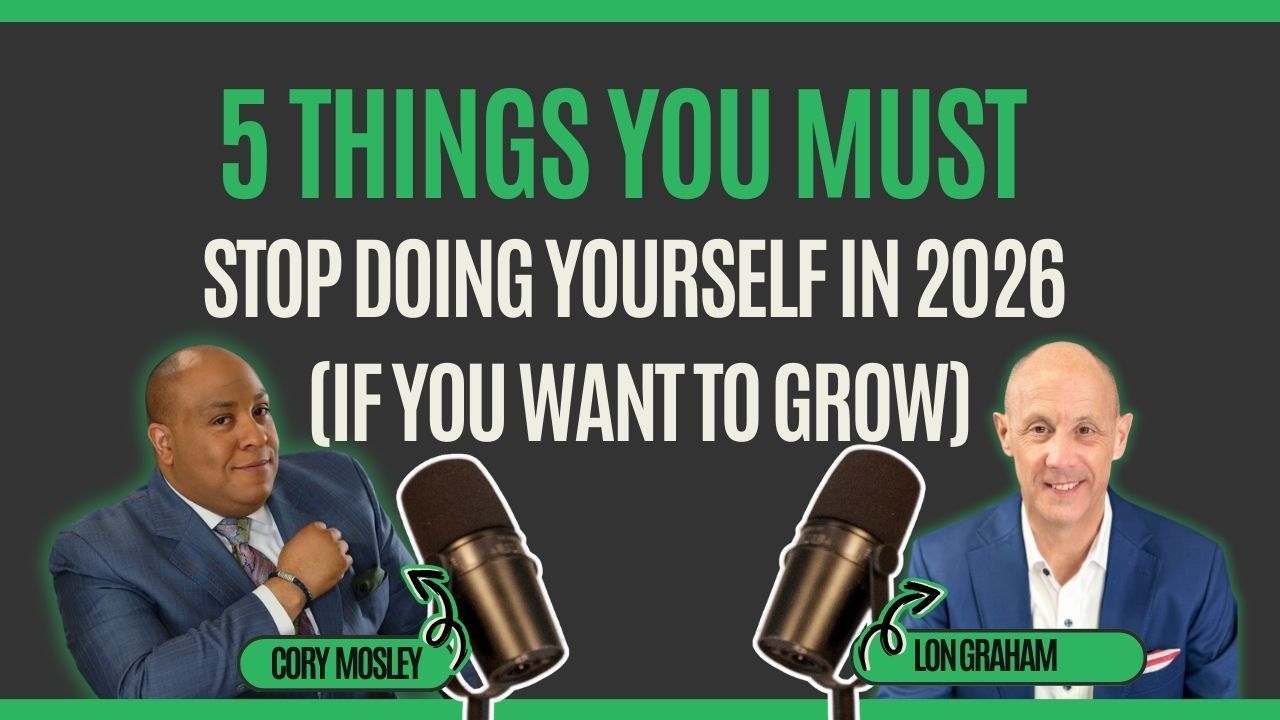
In this episode of the Grow Business Podcast, Cory Mosley and Lon Graham explore the hidden costs of doing it all yourself—and what business owners should finally stop doing in 2026.


This conversation goes beyond hustle culture. It’s about freeing up time, energy, and decision-making power so that you can grow with clarity and confidence—not burnout.


If you're serious about growth this year, it's time to stop wearing every hat and start building the right support system.


Inside this episode:

  • Why DIY marketing isn’t a strategy—it’s a stall tactic
  • How poor sales follow-up quietly kills your revenue
  • Why tech stack chaos costs more than it saves
  • The real reason your hiring, training, and onboarding don’t stick
  • How weak branding keeps your pricing—and sales—low
  • The power of fractional leadership to scale smarter, not harder
  • What consistency and authority really look like in 2026
  • Why clarity isn’t optional if you want to grow

Whether you’re scaling a business, leading a team, or trying to reclaim your time—this episode is your permission to stop doing it all and start growing with strategy.


Plus: Sponsored by Pecan Jacks Ice Cream and Candy Kitchen—now franchising nationwide. With nearly $1M in average unit volume, this is a sweet opportunity you don’t want to miss. Learn more at pecanjacksfranchise.com.


Credits:

  • Hosted by: Cory Mosley, Business Growth Strategist
  • Co-Hosted by: Lon Graham, Voice of Reason
  • Produced by: Willie H.

Share Post

Similar Posts
By Cory Mosley February 25, 2026
In this episode of the Grow Business Podcast, Cory Mosley and Lon Graham break down one of the most overhyped — and misunderstood — forces in business right now: AI. Artificial intelligence isn’t optional anymore. It’s everywhere. In your software. In your marketing tools. In your inbox. In your competitors’ sales stack. But here’s the real issue: AI won’t ruin your business. Using it without intention will. This conversation isn’t about whether AI is powerful. It is. It’s about how leaders should think about it. Because speed without strategy is vulnerability. And automation without judgment is risk. If you’ve ever felt the pressure to “do something with AI” just to keep up, this episode resets the conversation. You don’t need to adopt AI faster. You need to adopt it smarter. In this episode: Why AI should never replace your judgment AI can draft contracts, generate marketing plans, and analyze data in seconds. But it cannot understand nuance, context, or consequence the way a human leader can. Efficiency does not equal correctness. Use AI for speed and structure—but keep humans in charge of final decisions. How generic AI content can dilute your brand AI pulls from existing information. That means if you’re not careful, your messaging becomes a remix of everyone else’s. Your brand voice is an asset. It creates differentiation and pricing power. Copying and pasting without refining erodes what makes you distinct. The danger of outsourcing hard thinking AI is most dangerous when it becomes a shortcut for clarity. Strategy requires tension, debate, emotional intelligence, and values-based decisions. If you let AI define your positioning or customer understanding, you’re surrendering the very edge that makes you competitive. Where AI belongs in the customer experience—and where it doesn’t Automation is powerful for scheduling, logistics, and simple service requests. But complex issues, emotional conversations, and high-value interactions still require empathy. Efficiency might impress investors. Empathy builds loyalty. Every business must identify the threshold where humans take over. Why reactive AI adoption is a leadership mistake If you can’t clearly explain why you’re using AI, you shouldn’t be using it. Start with a business problem—not a tool. Test in controlled environments. Measure outcomes. Refine. AI should amplify what already works. It should not cover up what’s broken.
By Cory Mosley February 18, 2026
In this episode of the Grow Business Podcast, Cory Mosley and Lon Graham unpack a truth most business owners learn the hard way: Strategic partnerships don’t fail because the idea was bad. They fail because the expectations were vague. And in 2026, vague is expensive. Everybody wants to “collaborate.” Everybody wants to “get in front of your audience.” Everybody wants to “partner.” But a partnership that isn’t tied to a clear business outcome isn’t strategy. It’s speculation. This conversation breaks down how to evaluate partnerships with the same discipline you’d use to evaluate a hire, an investment, or a market expansion—because that’s what partnerships are: a leverage play or a momentum killer. You don’t need more opportunities. You need better filters. In this episode: When to pursue partnerships: only with a clear growth objective A real partnership solves a specific growth problem. It accelerates revenue, expands reach, or builds credibility faster than you could do alone. If you can’t clearly define what it’s supposed to do for the business, it’s not strategic—it’s entertainment. And entertainment is expensive when you’re trying to grow. Defining success is the first principle of leadership Cory makes it plain: defining success is the number one principle for success in sales leadership . Because if you don’t define success, you can’t measure progress. And if you can’t measure progress, you can’t manage the partnership. Partnerships need KPIs, timelines, and a clear “win condition.” Otherwise you’re stuck in the most dangerous phrase in business: “Let’s just see what happens.” Avoid partnerships when roles, ownership, and control are vague Ambiguity feels friendly at the beginning. But it becomes expensive at the end. If decision-making authority isn’t defined, execution turns into friction. If ownership conversations keep getting avoided, the partnership becomes a slow-motion conflict you can see coming but don’t stop. And if you don’t talk about the exit before you start? You’ll eventually negotiate it while frustrated—and that’s when emotion gets expensive.
By Cory Mosley February 11, 2026
In this episode of the Grow Business Podcast, Cory Mosley and Lon Graham unpack a hard reality many business owners never see coming: success can become the most dangerous phase of growth . Not failure. Not competition. Not even the economy. The real threat in 2026 is believing that what made you successful will keep you successful. Markets don’t reward experience—they reward relevance . Customers don’t stop spending money in a down economy— who they spend it with changes . And your best year? That’s not a strategy. It’s a memory. This conversation is about identifying when confidence quietly turns into complacency, separating ego from execution, and redefining leadership for a faster, less forgiving market. If your business feels “stable” but not growing, this episode will challenge how you think about success. You don’t need to abandon your past wins. You need to stop letting them drive today’s decisions. In this episode: When confidence becomes complacency Past wins can create a false sense of immunity. Owners who’ve survived downturns often believe they’re untouchable—but ignoring early warning signs, dismissing new ideas, or saying “we’ve always done it this way” is how relevance erodes. Why your best year is not a growth plan Measuring performance against a past peak blinds you to current market conditions. Pricing, positioning, and buyer behavior have changed—and waiting for things to “go back” is how businesses stall out. The danger of tying your identity to the business When feedback feels personal, improvement stops. If your business can’t be questioned, it can’t be improved. Growth requires the ability to examine what’s broken without defending what’s familiar. Replacing ego-based decisions with evidence Instinct alone doesn’t scale. Customer behavior, retention, conversion, and attention matter more than opinions or legacy thinking. What worked before isn’t the question—what’s working now is. Redefining leadership for the 2026 market Leadership today isn’t about having all the answers. It’s about creating speed, clarity, and alignment—and building teams that challenge ideas instead of protecting egos. Winning leaders teach people how to think, not just what to do.
More Posts