Enhancing Your Company's Performance: The Essential Five Pillars Strategy

Cory Mosley
In today’s competitive market, the difference between success and stagnation often comes down to the ability to adapt and innovate. To guide your company towards sustainable growth, it's crucial to understand and implement the Five Pillars Strategy—a comprehensive approach that transforms the core of your business.


This strategy is not just about refining existing processes but about initiating profound change, starting with the often overlooked yet vital element: mindset.

The Foundation of Change: Mindset

“Change is difficult enough, but having a leader that's not open to it…” This highlights the importance of a growth mindset among leadership. Before embarking on strategic changes or operational improvements, leaders must ask: Are you truly open to evolution?


A growth mindset is the cornerstone of the Five Pillars Strategy. Without it, even the most innovative ideas can falter. For companies rooted in traditional methods, embracing this shift in perspective is both the beginning and the ongoing support for meaningful transformation.

Pillars Beyond Mindset

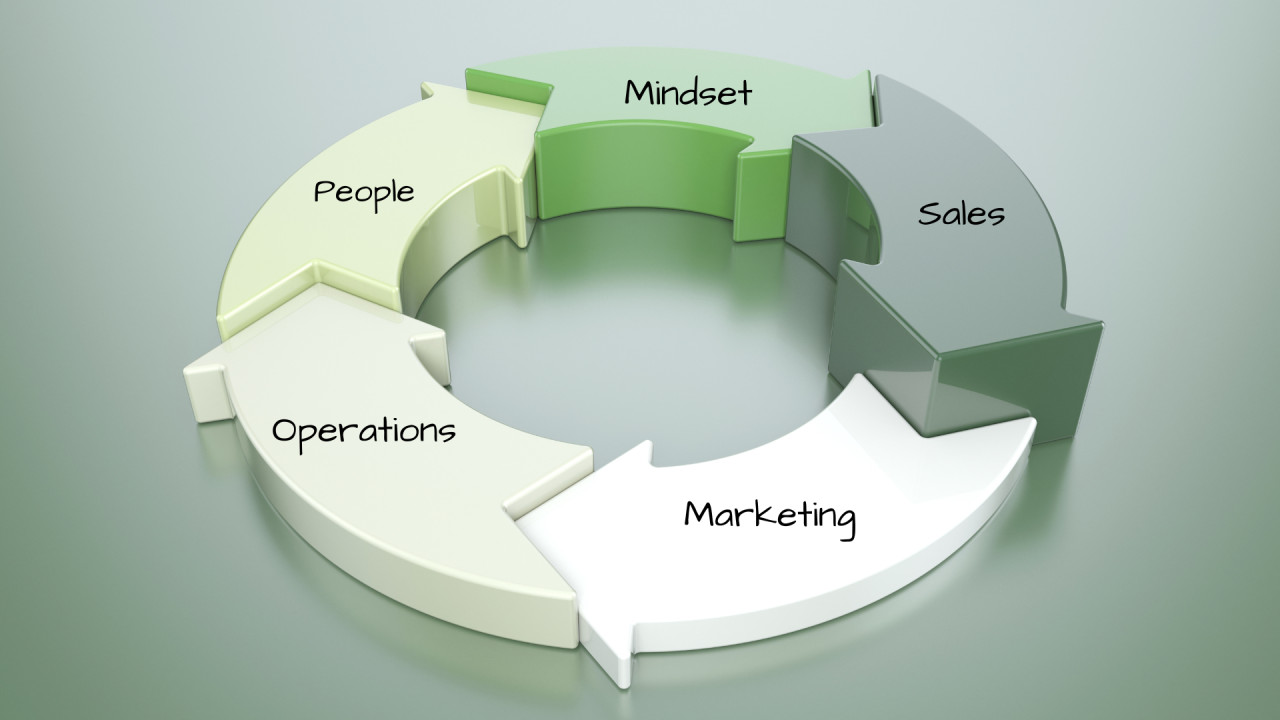
Once the mindset is established, focus on the other four pillars: processes, people, marketing, and positioning. Each pillar is integral to your business's ecosystem, influencing and enhancing the others.


  1. Processes: These are critical for operational efficiency. Clinging to outdated methods can impede growth. Embrace innovation and leverage new technologies to tackle current challenges effectively.
  2. People: This pillar underscores the importance of having a team that is not only skilled but also aligned with your vision and adaptable. Invest in leadership development and foster a culture of continuous learning.
  3. Marketing: Effective marketing goes beyond promotion. It involves branding, engagement, and building consumer trust, which directly impacts your company's reputation and success.
  4. Positioning: This pillar focuses on how you differentiate yourself in a crowded market. It’s about innovative thinking and anticipating or creating market shifts.

Integrating the Five Pillars: Achieving Symbiosis

The Five Pillars Strategy is most powerful when these elements work together harmoniously. Think of it like Voltron—each pillar is strong on its own, but together, they create unparalleled strength and effectiveness.

The Three W's Approach

This strategy includes a valuable method of analysis known as the Three W's: What are we doing now? Why do we do it this way? What better way can we do it? This cycle of questioning encourages continuous improvement and fosters a culture of curiosity and openness.


Understanding the core issues—rather than just addressing surface-level problems—is crucial. The Three W's help identify the root causes, guiding you towards meaningful and effective change.

Taking the Leap: Are You Ready?

Embracing this strategy requires introspection and bold innovation. Leaders must challenge the status quo and be open to change, not just in strategy but in mindset. Great achievements begin with a willingness to try and persevere through uncertainty.

Key Takeaways

  1. Embrace a Growth Mindset: Openness to change is the foundation for all other pillars. Without it, progress remains elusive.
  2. Harmonize the Five Pillars: Ensure that strategy, people, processes, marketing, and positioning work together to create synergy and drive growth.
  3. Employ the Three W's: Regularly question your practices to understand not only the "what" and the "why," but also the potential for a better "how."
  4. Acknowledge the Core Issue: Distinguish between superficial problems and root causes to effectively pivot your strategy.
  5. Leadership Initiative: Transformation begins with leaders who model adaptability and vision.


The Five Pillars Strategy is more than a set of procedures; it’s a commitment to continuous evolution and relevance in a rapidly changing world.

Ready to Transform Your Business?

Are you prepared to take your organization from stagnation to growth? Dive deeper into how the Five Pillars Strategy can revolutionize your company's performance. Visit corymosley.com to learn more and start your journey towards transformative success.

Share Post

Similar Posts
By Cory Mosley February 18, 2026
In this episode of the Grow Business Podcast, Cory Mosley and Lon Graham unpack a truth most business owners learn the hard way: Strategic partnerships don’t fail because the idea was bad. They fail because the expectations were vague. And in 2026, vague is expensive. Everybody wants to “collaborate.” Everybody wants to “get in front of your audience.” Everybody wants to “partner.” But a partnership that isn’t tied to a clear business outcome isn’t strategy. It’s speculation. This conversation breaks down how to evaluate partnerships with the same discipline you’d use to evaluate a hire, an investment, or a market expansion—because that’s what partnerships are: a leverage play or a momentum killer. You don’t need more opportunities. You need better filters. In this episode: When to pursue partnerships: only with a clear growth objective A real partnership solves a specific growth problem. It accelerates revenue, expands reach, or builds credibility faster than you could do alone. If you can’t clearly define what it’s supposed to do for the business, it’s not strategic—it’s entertainment. And entertainment is expensive when you’re trying to grow. Defining success is the first principle of leadership Cory makes it plain: defining success is the number one principle for success in sales leadership . Because if you don’t define success, you can’t measure progress. And if you can’t measure progress, you can’t manage the partnership. Partnerships need KPIs, timelines, and a clear “win condition.” Otherwise you’re stuck in the most dangerous phrase in business: “Let’s just see what happens.” Avoid partnerships when roles, ownership, and control are vague Ambiguity feels friendly at the beginning. But it becomes expensive at the end. If decision-making authority isn’t defined, execution turns into friction. If ownership conversations keep getting avoided, the partnership becomes a slow-motion conflict you can see coming but don’t stop. And if you don’t talk about the exit before you start? You’ll eventually negotiate it while frustrated—and that’s when emotion gets expensive.
By Cory Mosley February 11, 2026
In this episode of the Grow Business Podcast, Cory Mosley and Lon Graham unpack a hard reality many business owners never see coming: success can become the most dangerous phase of growth . Not failure. Not competition. Not even the economy. The real threat in 2026 is believing that what made you successful will keep you successful. Markets don’t reward experience—they reward relevance . Customers don’t stop spending money in a down economy— who they spend it with changes . And your best year? That’s not a strategy. It’s a memory. This conversation is about identifying when confidence quietly turns into complacency, separating ego from execution, and redefining leadership for a faster, less forgiving market. If your business feels “stable” but not growing, this episode will challenge how you think about success. You don’t need to abandon your past wins. You need to stop letting them drive today’s decisions. In this episode: When confidence becomes complacency Past wins can create a false sense of immunity. Owners who’ve survived downturns often believe they’re untouchable—but ignoring early warning signs, dismissing new ideas, or saying “we’ve always done it this way” is how relevance erodes. Why your best year is not a growth plan Measuring performance against a past peak blinds you to current market conditions. Pricing, positioning, and buyer behavior have changed—and waiting for things to “go back” is how businesses stall out. The danger of tying your identity to the business When feedback feels personal, improvement stops. If your business can’t be questioned, it can’t be improved. Growth requires the ability to examine what’s broken without defending what’s familiar. Replacing ego-based decisions with evidence Instinct alone doesn’t scale. Customer behavior, retention, conversion, and attention matter more than opinions or legacy thinking. What worked before isn’t the question—what’s working now is. Redefining leadership for the 2026 market Leadership today isn’t about having all the answers. It’s about creating speed, clarity, and alignment—and building teams that challenge ideas instead of protecting egos. Winning leaders teach people how to think, not just what to do.
By Cory Mosley February 4, 2026
In this episode of the Grow Business Podcast, Cory Mosley and Lon Graham break down one of the most misunderstood drivers of small business growth: timing . Trends aren't just buzz—they're signals. The businesses winning market share today aren’t always the smartest. They’re the ones moving faster . Spotting early patterns. Acting before consensus. Testing before perfection. And turning ideas into offers before the crowd shows up. This conversation is about sharpening your awareness, upgrading your decisions, and taking proactive control of growth. If you’ve ever missed an opportunity because you waited “to see how it plays out,” this episode is your wake-up call. You don’t need to predict the future. You need to listen better , move quicker , and package smarter —starting now. In this episode: Why trend timing beats trend chasing If you're waiting on a report to confirm what your customers already told you, you're behind. Market share is captured in the gap between early awareness and mass adoption. How to build your “Trend Radar” Your next growth opportunity is already showing up—in customer complaints, requests, and unexpected purchases. You just haven’t systemized listening yet. The myth of going “all in” The best ideas don’t start as big bets. They start as small, fast experiments. 90-day sprints, soft rollouts, and test offers let you learn quicker and risk less. Turning trends into actual offers Buzz doesn’t convert—clarity does. It’s not about launching the next hot idea. It’s about simplifying decisions, selling the outcome, and showing how the trend helps your customer win. Why “consensus” is your enemy By the time everyone agrees a trend matters, the advantage is gone. Real leaders act on evidence, not certainty—and that’s where the edge lives.
More Posts